Håvard Rue
Creator of INLA and the architect of its computational engine.
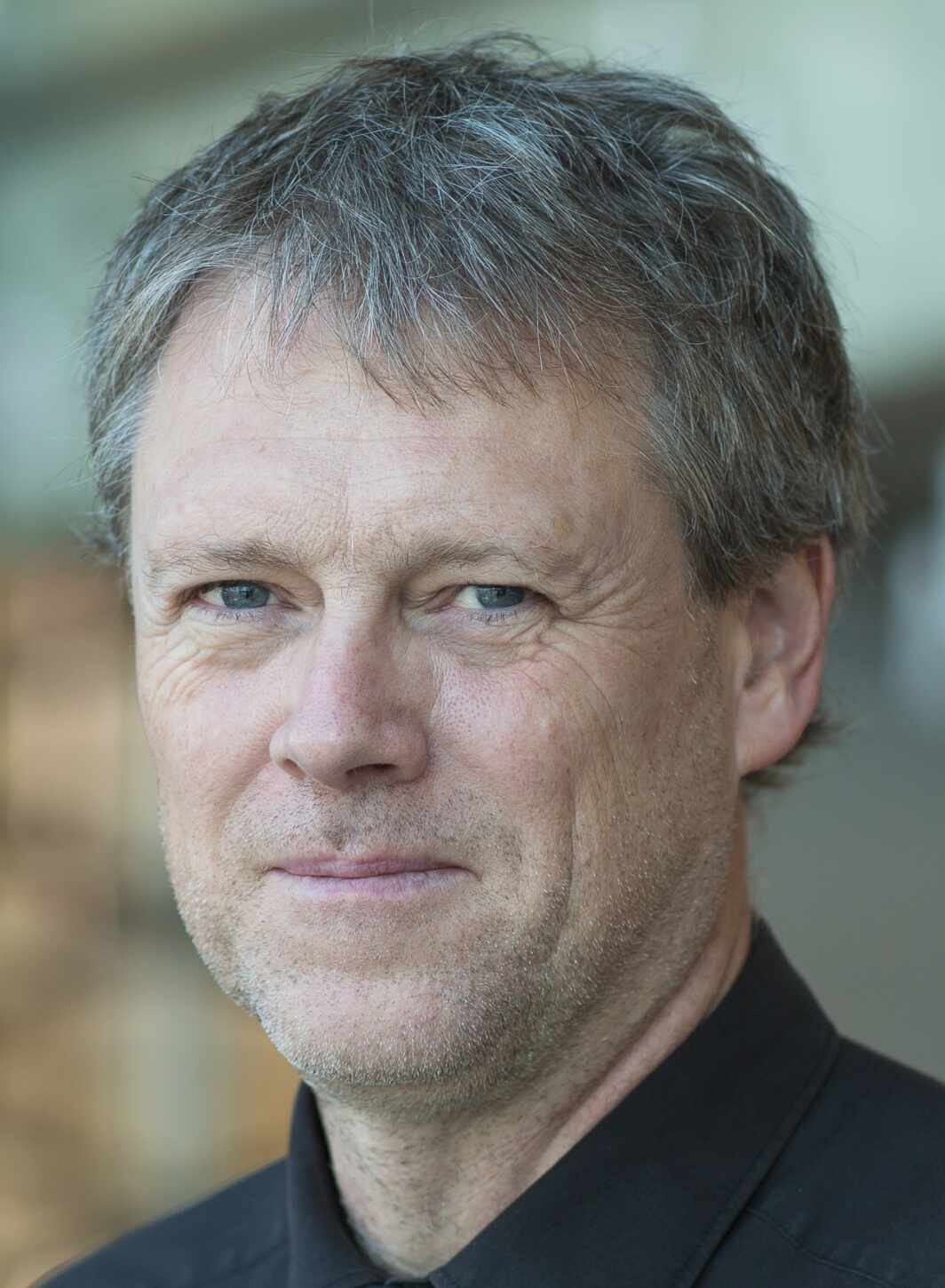
Professor Håvard Rue
Håvard Rue is the creator of the Integrated Nested Laplace Approximation (INLA) methodology and the sole architect and developer of the INLA computational engine written in C/C++. His work has fundamentally changed how Bayesian inference is performed for latent Gaussian models, making it accessible and computationally feasible for researchers across statistics, epidemiology, ecology, climate science, and many other fields.
Key Contributions
INLA Methodology
Developed the theoretical framework for Integrated Nested Laplace Approximations, providing a deterministic alternative to MCMC for Bayesian inference in latent Gaussian models. This breakthrough enabled inference that is orders of magnitude faster than sampling-based methods.
The INLA Engine
Designed and built the entire INLA computational engine in C/C++. This high-performance core library powers both R-INLA and pyINLA, handling sparse matrix computations, numerical integration, and the nested approximation algorithms.
Gaussian Markov Random Fields
Pioneered the use of GMRFs with sparse precision matrices for efficient spatial and temporal modeling. His work on sparse matrix algorithms is central to INLA's computational speed, reducing complexity from O(n³) to as low as O(n).
The SPDE Approach
Together with collaborators, developed the SPDE (Stochastic Partial Differential Equations) approach for spatial modeling with INLA. This connects continuous spatial processes (Matérn fields) to discrete GMRFs via finite element methods, enabling scalable geostatistical inference.
Foundational Publications
- 2005 Rue, H. and Held, L. Gaussian Markov Random Fields: Theory and Applications. Chapman & Hall/CRC Press. Monographs on Statistics and Applied Probability, No. 104.
- 2009 Rue, H., Martino, S. and Chopin, N. Approximate Bayesian inference for latent Gaussian models by using integrated nested Laplace approximations. Journal of the Royal Statistical Society: Series B, 71(2), 319-392.
- 2011 Lindgren, F., Rue, H. and Lindström, J. An explicit link between Gaussian fields and Gaussian Markov random fields: the stochastic partial differential equation approach. Journal of the Royal Statistical Society: Series B, 73(4), 423-498.
- 2017 Rue, H., Riebler, A., Sørbye, S.H., Illian, J.B., Simpson, D.P. and Lindgren, F.K. Bayesian computing with INLA: a review. Annual Review of Statistics and Its Application, 4, 395-421.
Acknowledgement
pyINLA exists because of the foundational work Håvard Rue has done over more than two decades: from the theoretical development of INLA to the meticulous engineering of its C/C++ engine. Every computation pyINLA performs relies on the engine he built. We are grateful for his sustained commitment to making Bayesian inference fast, accurate, and accessible to the broader scientific community.
A Note on Working with Håvard
Beyond his technical contributions, those who have worked closely with Håvard know him as an exceptionally supportive mentor. He brings patience, clarity, and genuine encouragement to every collaboration, creating an environment where researchers feel confident tackling difficult problems.
What becomes evident over time is the remarkable breadth of his expertise as a leading statistician. Working under his guidance means absorbing knowledge in Bayesian theory, numerical methods, and software engineering.
Working on different layers of the INLA ecosystem reveals new dimensions of what he has built, the C/C++ engine itself, where every latent model requires careful implementation and rigorous mathematical proofs, and the extensive R codebase with the considerable engineering effort behind cross-platform compatibility across Linux, Windows, and macOS.
Esmail Abdul Fattah